Minimum was a cloud infrastructure startup I worked on with three friends throughout high school. We wanted to make deploying and managing cloud infrastructure simpler, with the longer-term ambition of making infrastructure increasingly autonomous.
I was the sole designer, knowing almost nothing about cloud infrastructure. I didn't really understand how deployments worked, what went into running an application, or why developers needed half the tools we were trying to build. I was learning everything as I went, often asking my teammates to explain technical concepts before I could even begin thinking about how to design for them.
Looking back, I think that was one of the best things about working on Minimum. I had to develop an understanding of the technology rather than just designing interfaces around things I already knew. It forced me to think about how complicated systems could be made approachable without taking away the control and flexibility that developers needed.
Experimenting with the interface
Minimum was probably one of the most important projects in shaping how I design today. We were ambitious, and I was young enough that I didn't feel particularly constrained by how things were supposed to look or work.
I pushed the interface in all sorts of directions, sometimes to an extreme. I spent countless hours experimenting with navigation, layouts, interactions, and different ways of representing infrastructure. I wasn't particularly interested in making another conventional cloud dashboard. I wanted to question whether the conventions of existing developer tools were even the right ones to follow.
Not every experiment was good. Some were probably unnecessarily complicated, and others prioritized looking interesting over being useful. But I think having that freedom to break conventions, make mistakes, and figure out why something did or didn't work was incredibly valuable.
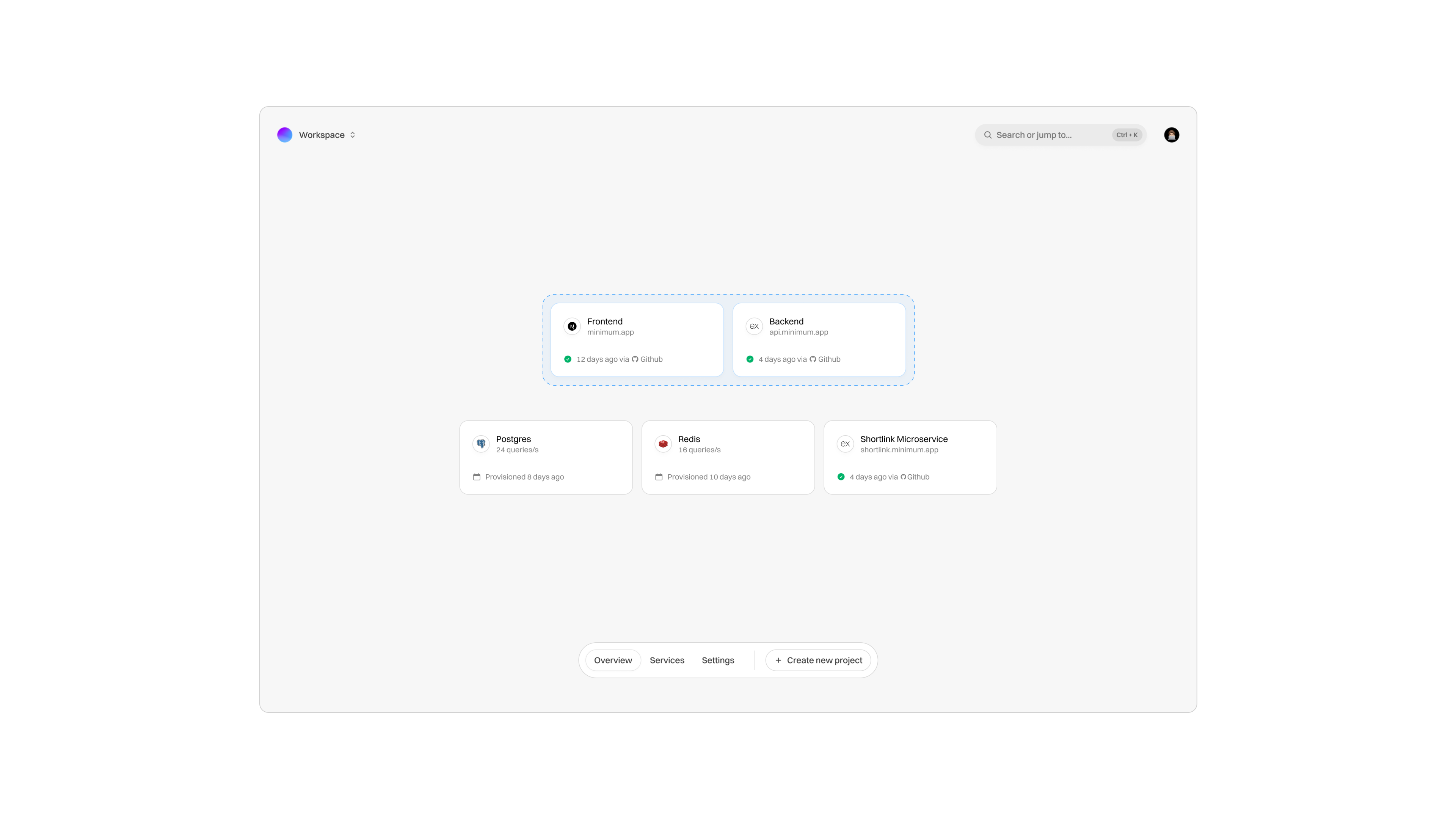
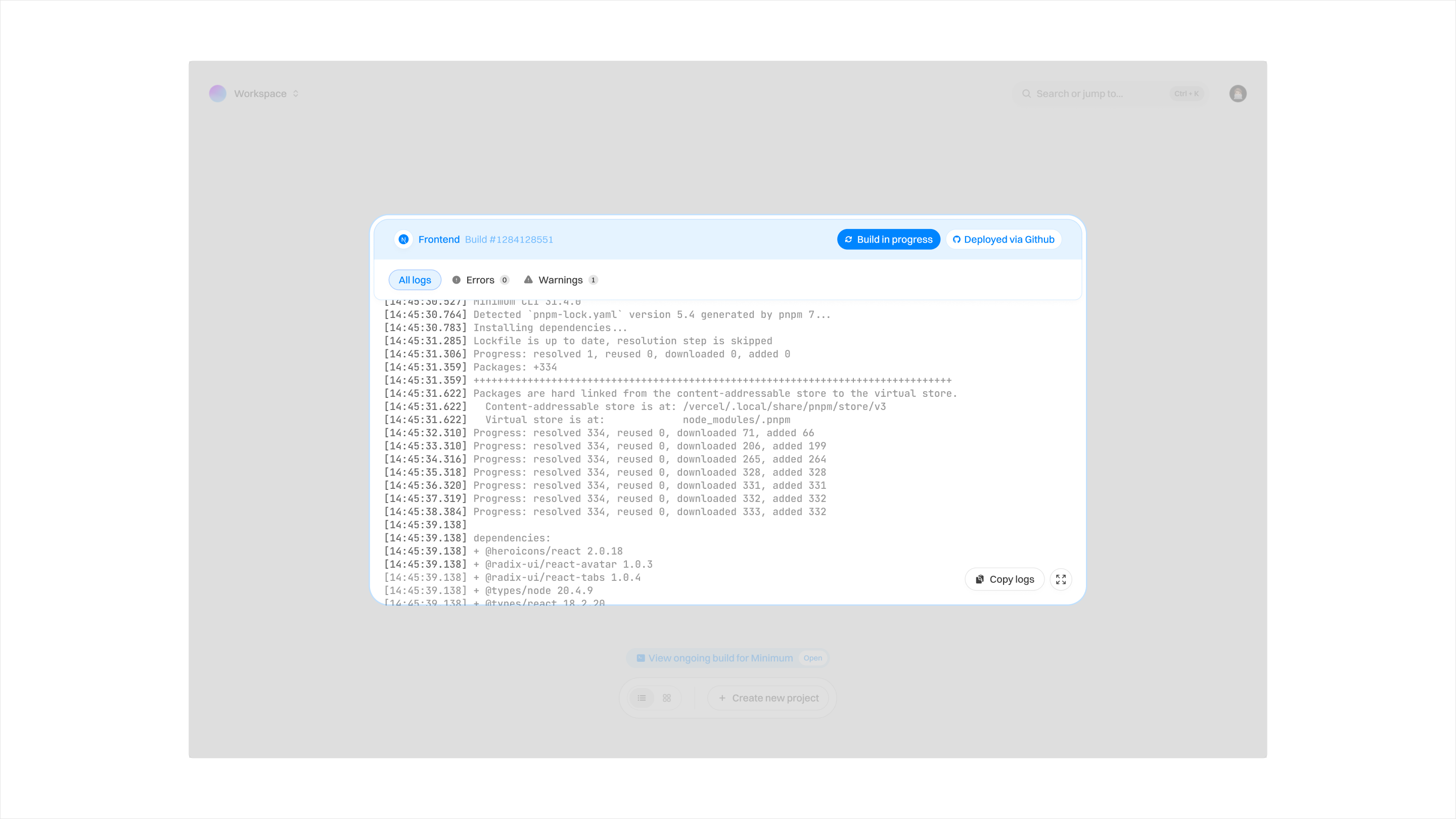
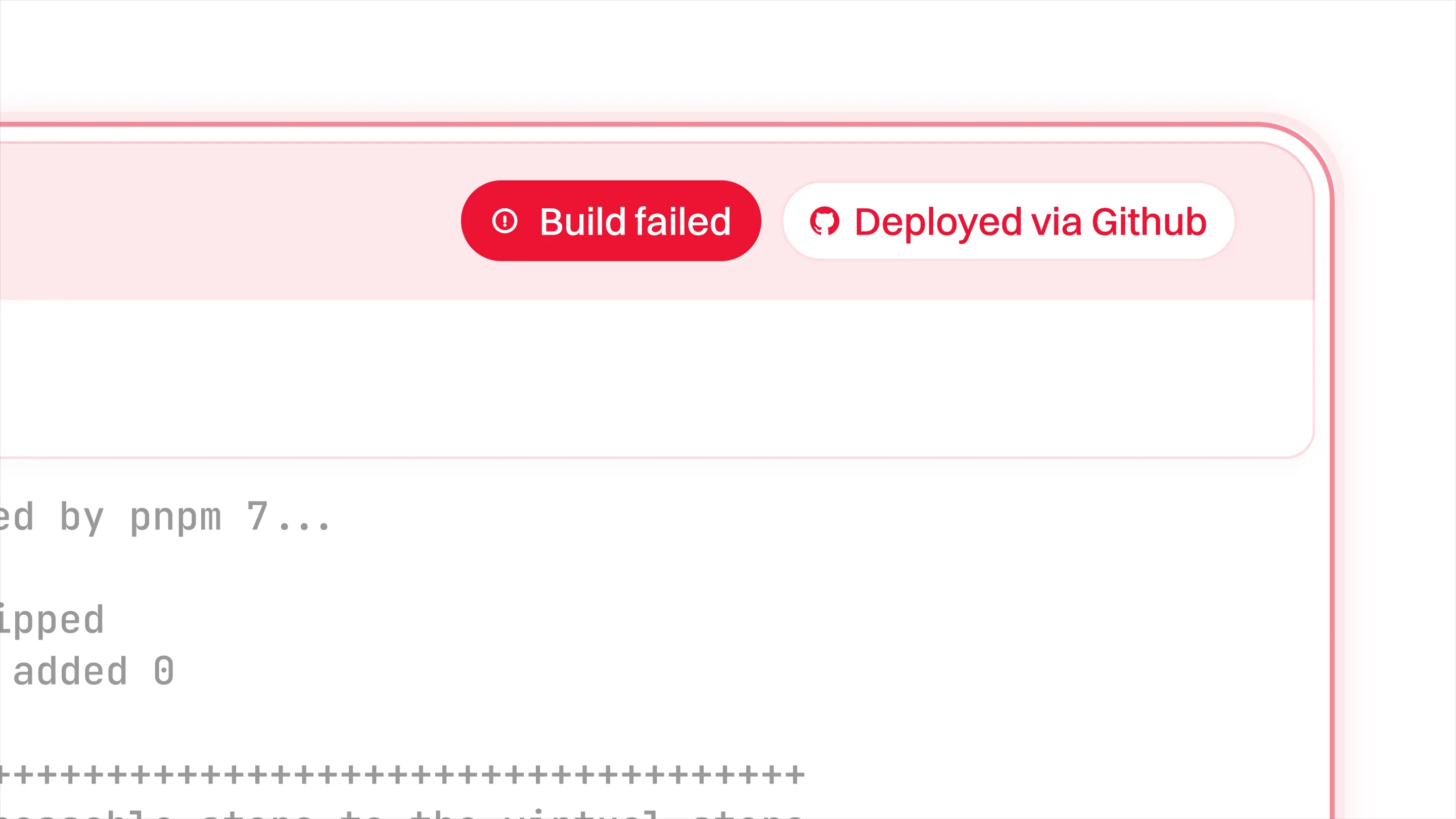
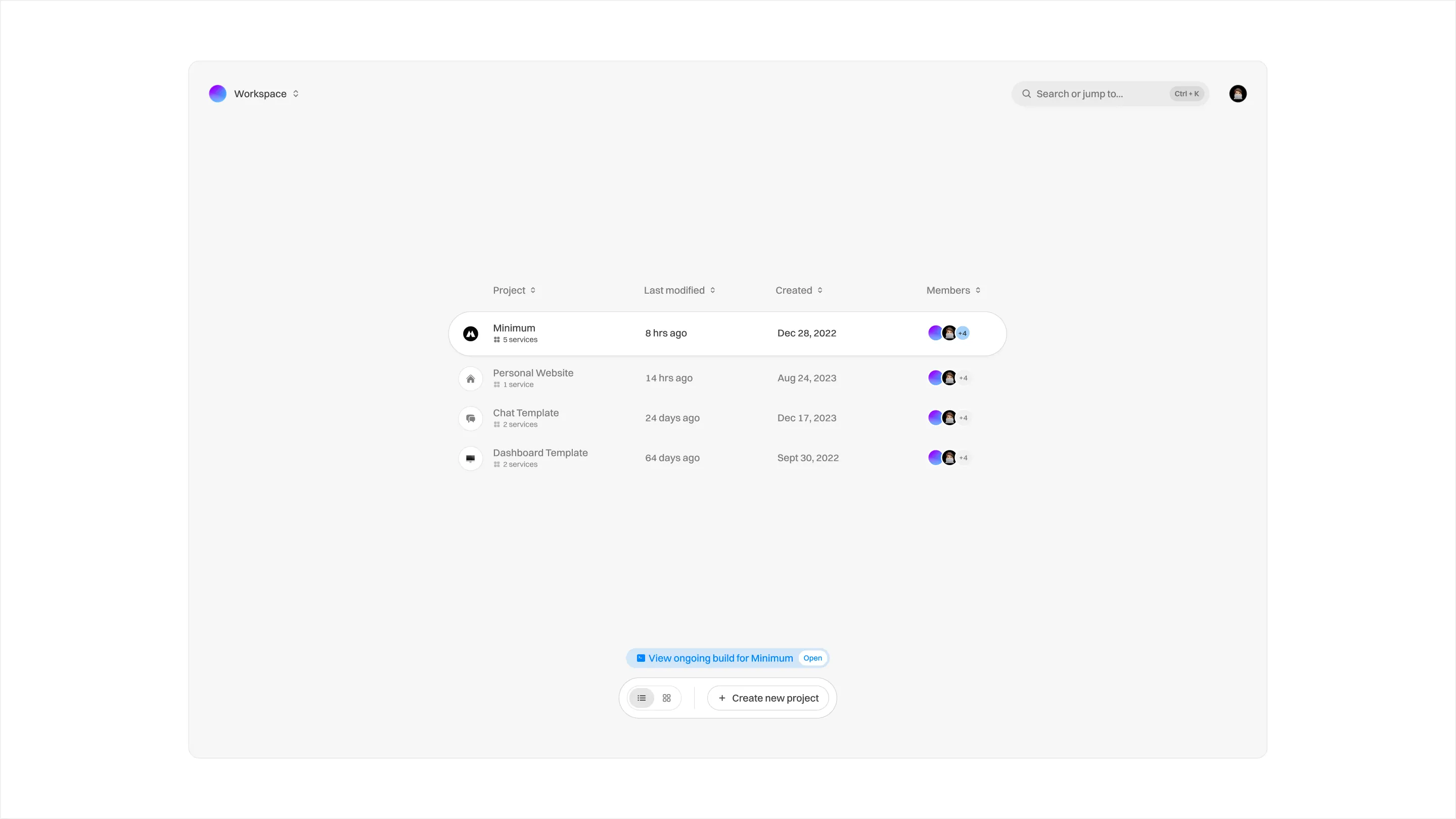
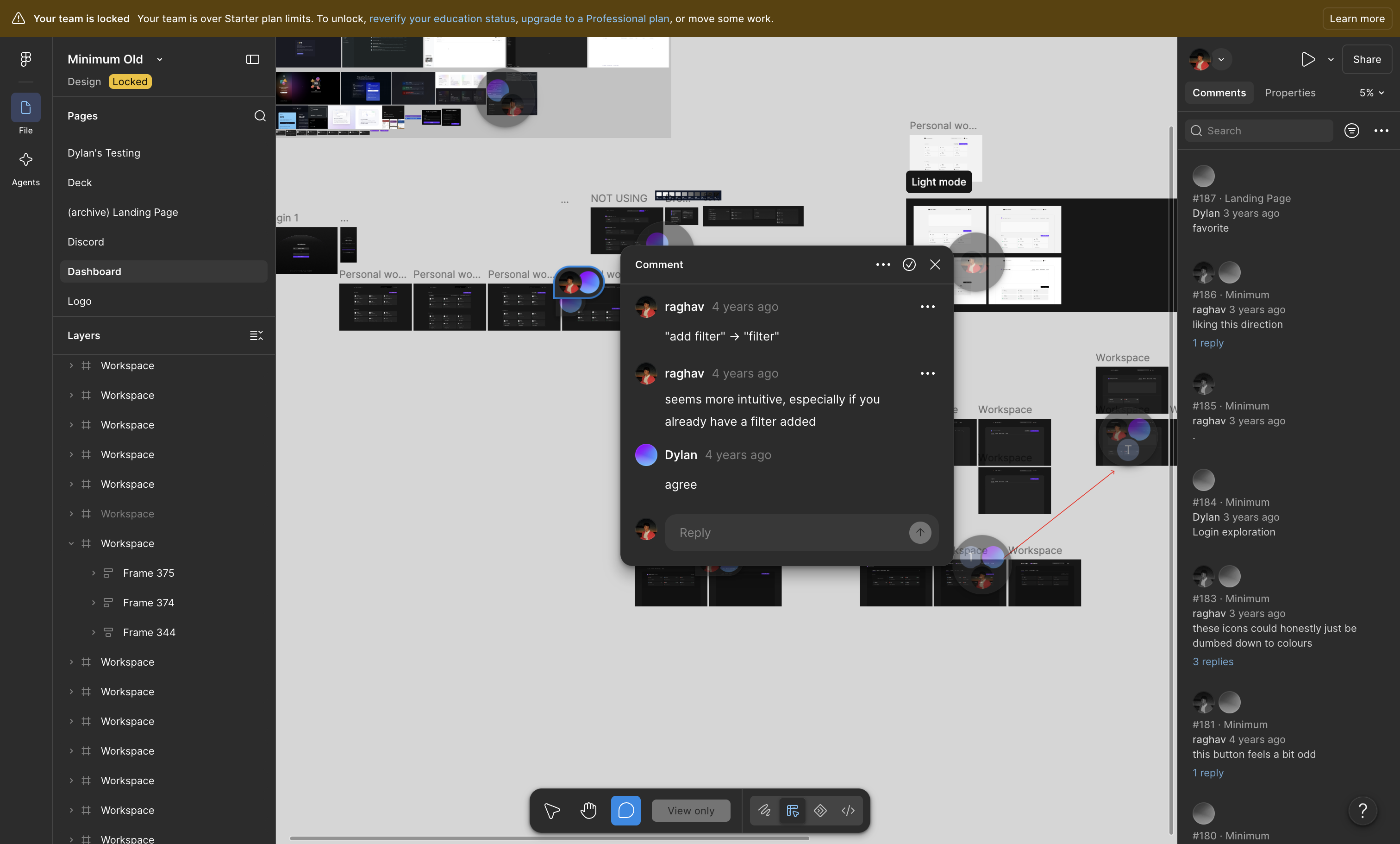
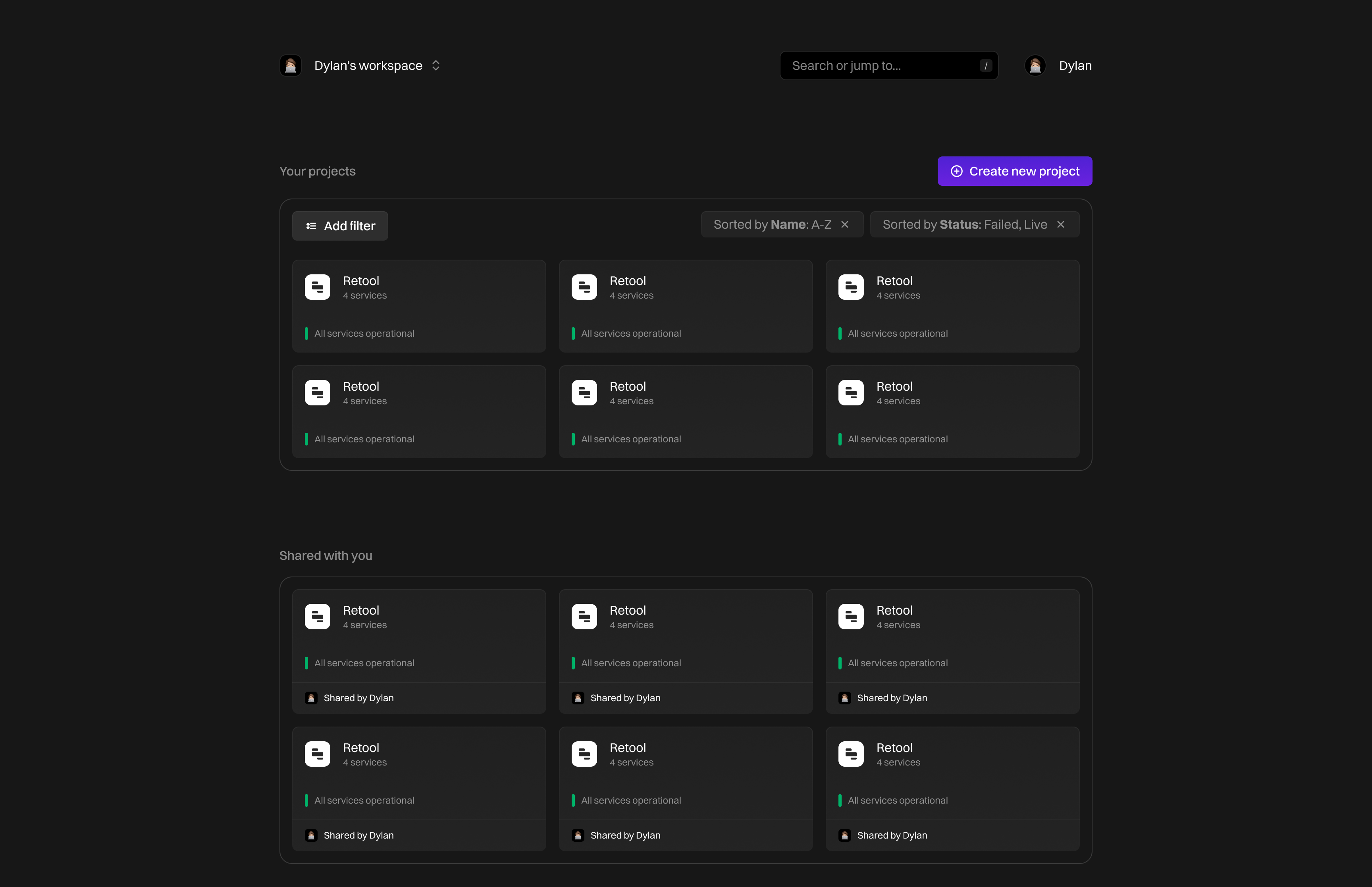
Below, you can see my first dashboard design alongside early iterations from 2022. The difference from that to the final work is pretty dramatic, and you can see just how much I evolved over the course of the project. It's a fun reminder of how much you can learn by simply making things over and over again.
A little ahead of ourselves
One of our bigger ambitions with Minimum was the idea of autonomous infrastructure. We imagined a world where developers wouldn't have to spend so much time configuring, monitoring, and maintaining their infrastructure. Instead, software could increasingly handle those responsibilities on its own, identifying problems, making adjustments, and keeping things running.
This was before everyone started describing software as agentic, which makes it funny to look back on now. A lot of what we were imagining feels closely related to the direction that companies like Vercel are exploring today, especially around making infrastructure something developers have to think about less and less.
Obviously, we never got close to realizing the full vision, but I still think it's pretty cool that we were thinking about these problems so early.
Building with friends on the internet
One of my favourite things about Minimum was how we worked together. We all met through Discord, and despite spending so much time building together, we barely ever got on calls.
I remember spending hours in Figma with Dylan, moving things around, sharing ideas, and trying completely different directions, all without ever having spoken to each other. Almost everything happened through Discord messages. It was a pretty unconventional way of working, but somehow it worked for us.
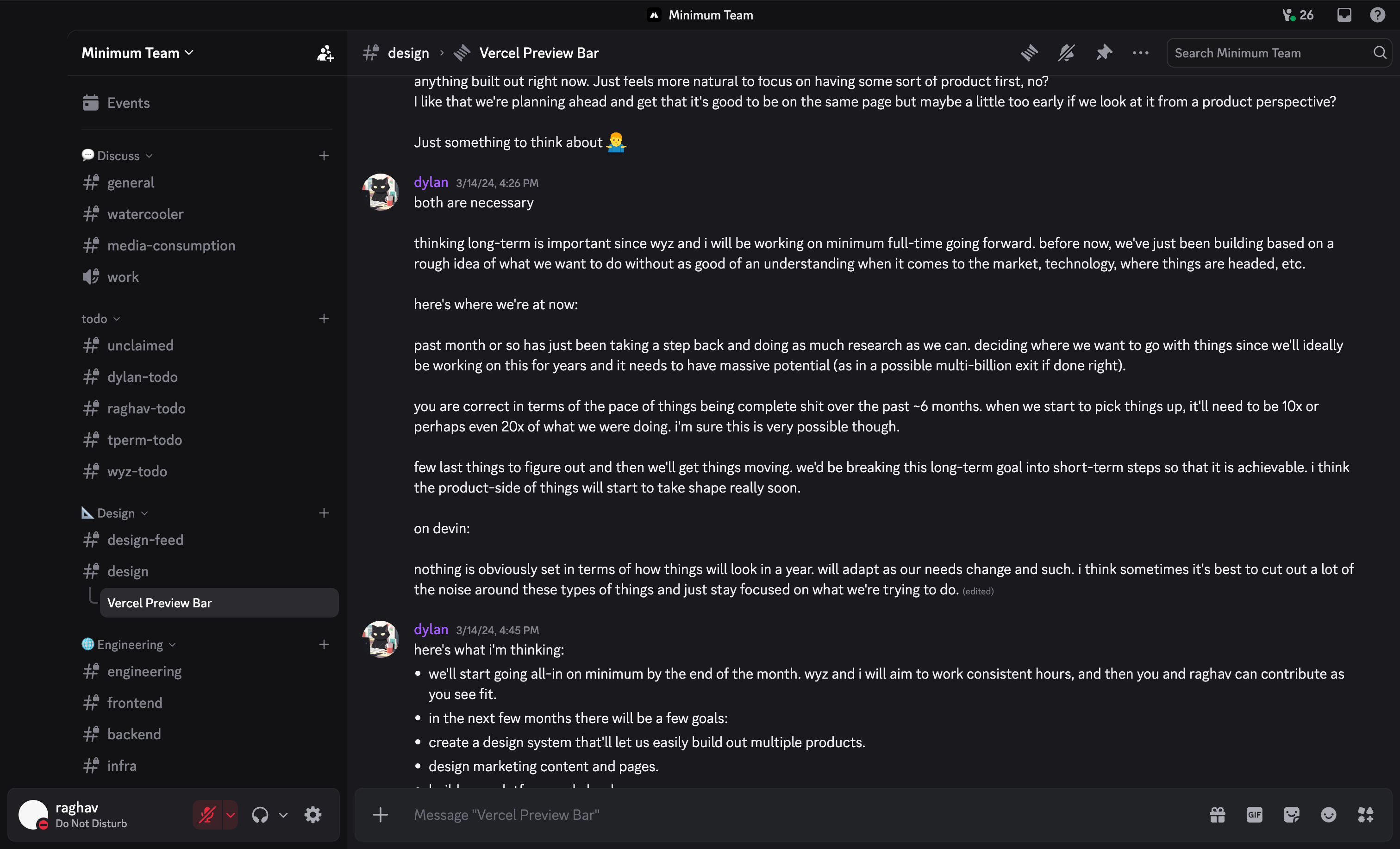
Looking back at these conversations, it's kind of crazy how ambitious we were for a bunch of kids in high school. We were talking about building a company that could be worth billions, working on it full-time, and spending years turning it into something real. Meanwhile, I was still going to school every morning and spending my afternoons and evenings on Discord.
I think those hours after school shaped a lot of who I am today, both as a designer and as a person. I got to surround myself with people who were just as excited about building things as I was, despite us living completely different lives in different places. We took our ideas seriously, even when they were probably a little ridiculous, and I think there's something really valuable about that kind of ambition at such a young age.
Eventually, Minimum came to an end. We were all getting busier with school and our own lives, and the reality of graduating and figuring out our futures started to set in. It became harder to give the project the time and attention it deserved, and we slowly moved on to other things.
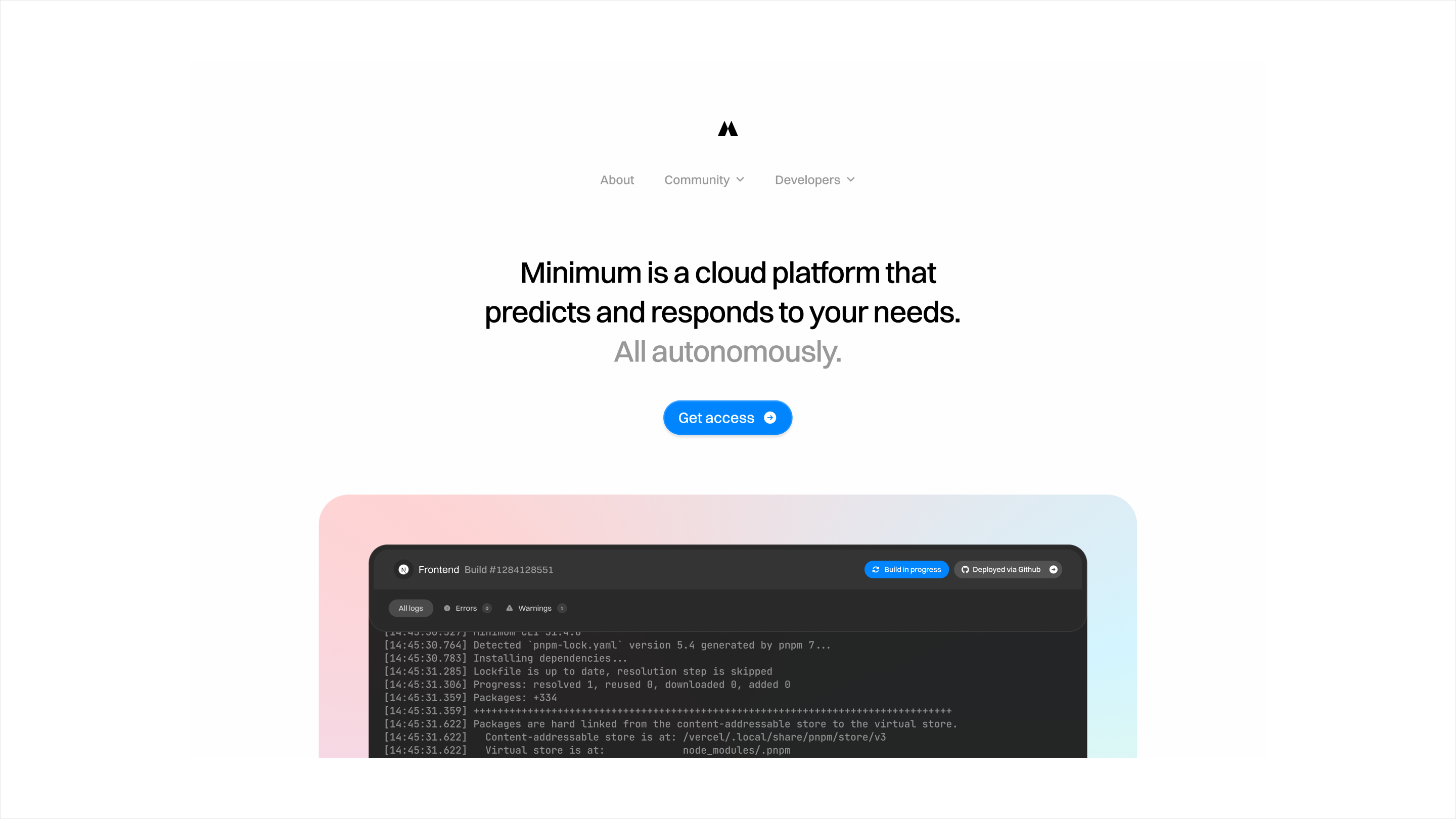
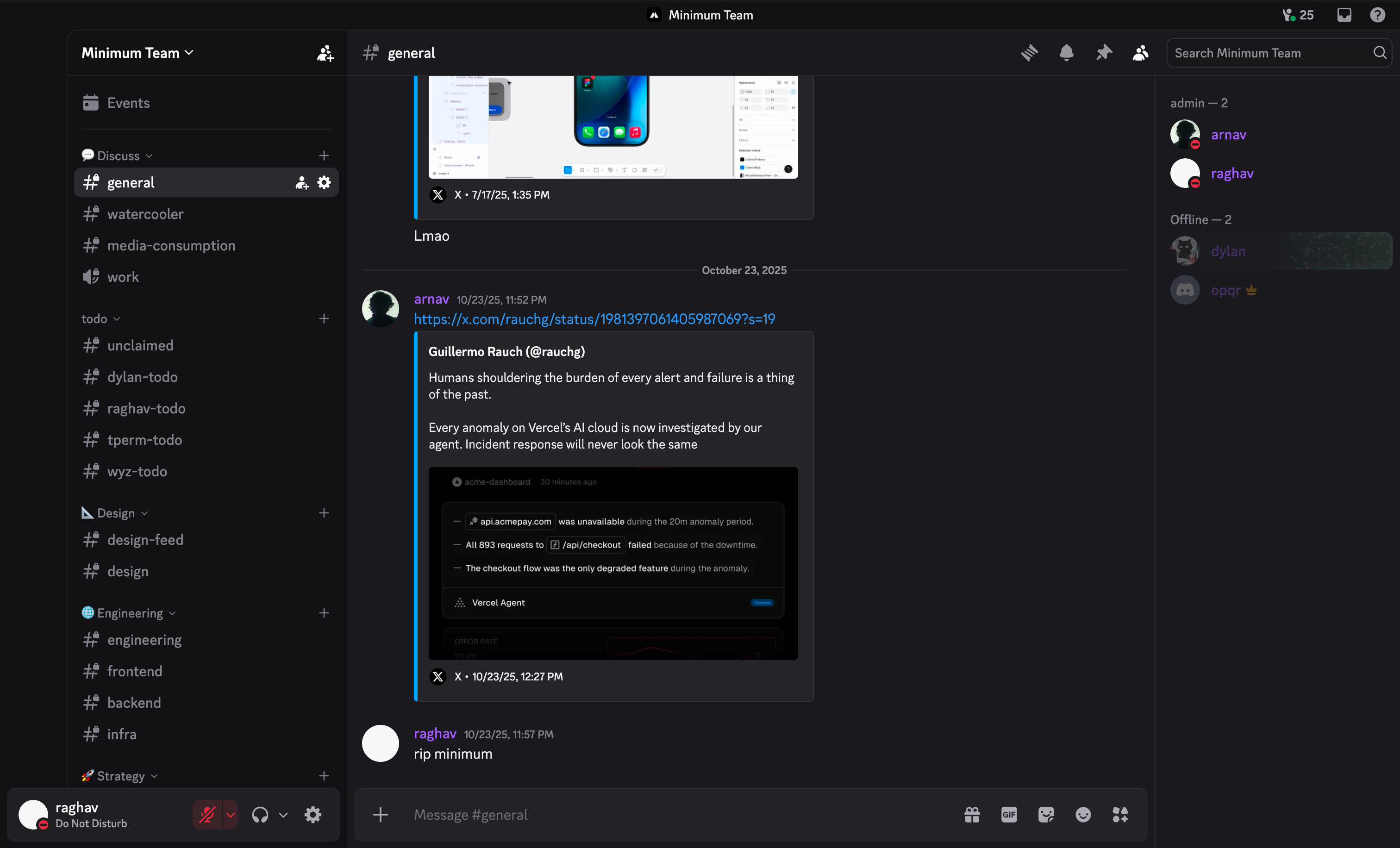
Although Minimum never became the company we imagined, I'm incredibly glad we worked on it. It gave me a place to experiment without worrying too much about getting everything right, develop my taste, and learn how to think through complicated product problems.
I don't think I'd be the designer I am today without this project.